
Planning a party in the UK and thinking about using a helium tank for balloons? You’re not alone — more and more people are choosing disposable helium tanks to make balloon decoration quick and hassle-free.
If it’s your first time, though, it can feel a bit confusing. How do you actually use a helium tank? How many balloons can it fill? And how long will they stay floating?
In this step-by-step UK guide, we’ll show you exactly how to use a helium tank for balloons, along with practical tips, common mistakes to avoid, and what to expect from your balloon helium tank.
How do you use a helium tank for balloons?
To use a helium tank for balloons, attach the nozzle, open the valve slowly, place the balloon over the nozzle, and gently press to release helium. Fill the balloon until firm, tie it securely, and close the valve after use.
Using a helium tank for balloons is actually much easier than most people expect. Whether you’re preparing for a birthday party or decorating for a special event, the process only takes a few minutes once you know the basics. Follow these simple steps to safely and properly inflate your balloons using a helium tank.
Follow these simple steps to safely and properly inflate your balloons using a helium tank.
Start by placing your helium tank on a flat, stable surface. This helps prevent it from tipping over while in use.
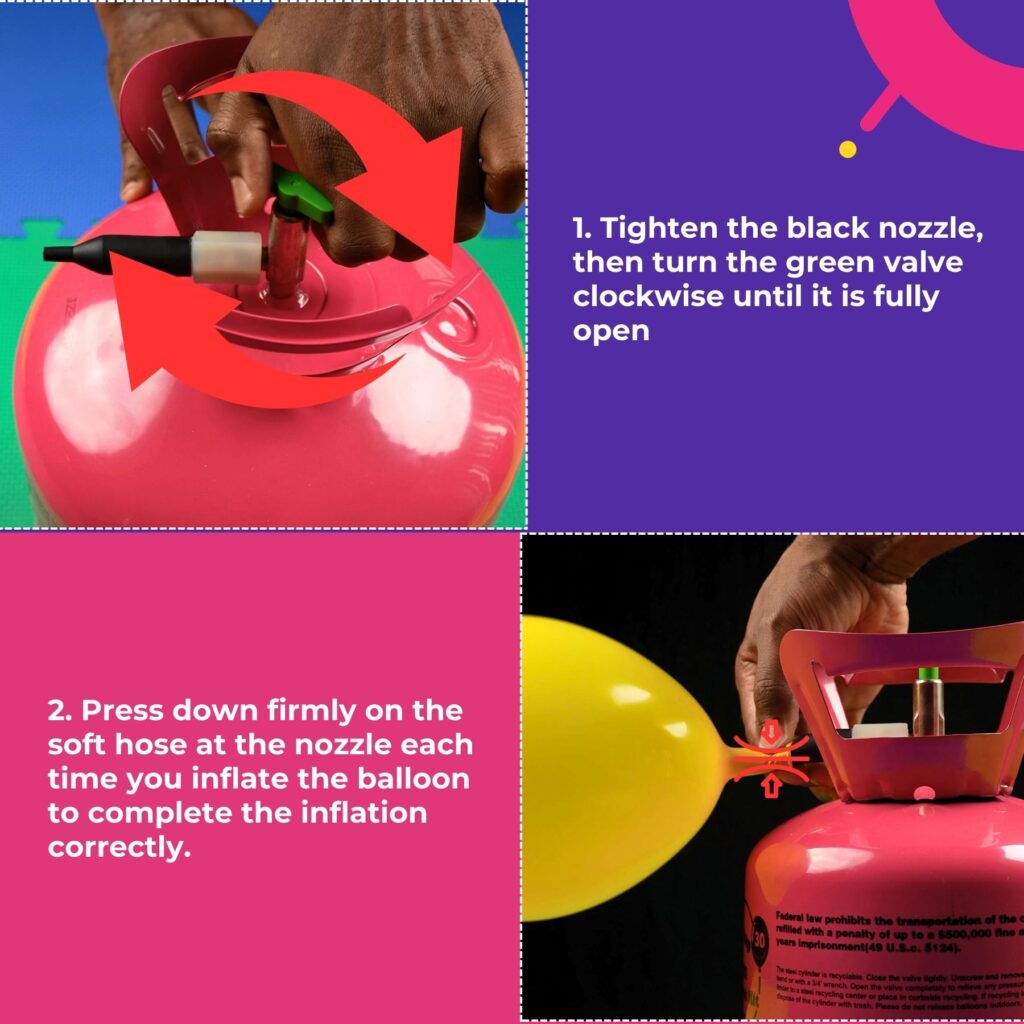
Slowly turn the valve at the top of the tank anti-clockwise to release the gas. You don’t need to fully open it — just enough to allow helium to flow when pressure is applied to the nozzle.
👉 Tip: Always open the valve gently to avoid releasing too much pressure at once.
Take your balloon (latex or foil) and carefully stretch the neck over the nozzle.
Make sure it fits tightly so that no helium escapes during inflation. If the seal isn’t secure, you may lose gas and reduce the number of balloons your helium tank can fill.
Gently press the nozzle (or tilt it, depending on your balloon helium tank design) to start releasing helium into the balloon.
Keep an eye on the balloon as it fills. Stop once it reaches a smooth, rounded shape.
👉 Avoid overfilling — balloons that are too tight are more likely to burst.
Carefully remove the balloon from the nozzle while holding the neck firmly to prevent air from escaping.
Tie a secure knot at the end. If you’re using ribbon, you can attach it at this stage.
Once you’ve finished inflating your balloons, turn the valve clockwise to fully close the tank.
This prevents any leftover helium from leaking and ensures your tank is ready for future use (if applicable).
For beginners, using a disposable helium tank like GreatWhip can make the process even easier, as it’s designed for simple, one-time use without any setup.
One of the most common questions people ask before buying a helium tank is: how many balloons can it actually fill?
The answer depends on a few factors, including the size of the tank and the type of balloons you’re using. Latex balloons typically use more helium than foil balloons, so the number can vary quite a bit.
Here’s a general guide to help you estimate how many balloons a standard helium tank can fill:
If you want a detailed breakdown by balloon size, check our guide on how many balloons a helium tank can fill.
| Tank Size | 9″ Latex Balloons | 12″ Latex Balloons | Foil Balloons (18″) |
|---|---|---|---|
| 7L | 20–25 | 12–15 | 8–10 |
| 13L | 40–50 | 25–30 | 15–18 |
| 22L | 70–80 | 45–55 | 25–30 |
There are a few things that can impact how far your helium tank goes:
Larger balloons require more helium. For example, a 12-inch balloon will use significantly more gas than a 9-inch one.
Foil balloons are more efficient because they don’t let helium escape as quickly as latex ones.
Overfilling balloons not only wastes helium but also increases the risk of them bursting. A steady, controlled fill will help you get the most out of your tank.
If you’re planning a party, it’s always a good idea to have a small buffer. Running out of helium halfway through decorating is more common than you might think.
For example, a 13L helium tank is often a great choice for small to medium-sized events, offering a good balance between capacity and convenience.
If you’re using a disposable helium tank, such as the GreatWhip range, these estimates can help you choose the right size based on your event needs.
Once your balloons are filled, the next question is usually: how long will they actually stay floating?
The answer depends mainly on the type of balloon you’re using. Some balloons can last for days, while others may only float for a few hours.
You can also read our full guide on how long helium balloons last for more tips.
Latex balloons are the most commonly used for parties, but they also have the shortest float time.
Because latex is slightly porous, helium gradually escapes over time. This is why balloons may start to droop by the end of the day.
👉 Tip: If your event is in the evening, it’s best to inflate latex balloons on the same day.
Foil (or Mylar) balloons last significantly longer because they are less porous and retain helium more effectively.
This makes foil balloons a great option for longer events or decorations that need to last.
Several factors can influence how long your helium balloons stay afloat:
Cold air can cause balloons to shrink, while heat can expand them and increase the risk of bursting.
Higher-quality balloons tend to hold helium better and last longer.
If you want your decorations to look fresh throughout your event, timing is key. Inflate latex balloons as close to the start time as possible, and consider mixing in foil balloons for longer-lasting displays.
Overfilling or underfilling can affect both the appearance and lifespan of the balloon.
If you want your decorations to look fresh throughout your event, timing is key. Inflate latex balloons as close to the start time as possible, and consider mixing in foil balloons for longer-lasting displays.
Even though using a helium tank for balloons is quite straightforward, there are a few common mistakes that can affect your results — or even waste helium.
Here are some of the most common issues to watch out for:
It might be tempting to make balloons as big as possible, but overfilling is one of the main reasons balloons burst.
A properly filled balloon should feel firm but still have a bit of flexibility.
👉 Tip: Stop inflating once the balloon has a smooth, rounded shape — don’t push it to its limit.
Not all balloons are suitable for helium.
👉 Always check that your balloons are labelled as suitable for helium use.
If the balloon isn’t tied tightly, helium can escape quickly — sometimes within minutes.
Make sure the knot is secure before letting go, especially with latex balloons.
After use, some people forget to fully close the valve on the helium tank.
This can cause slow leaks and reduce the number of balloons you can fill later.
👉 Always turn the valve off completely once you’re done.
Timing matters more than people think.
If you inflate latex balloons too far in advance, they may start to lose lift before your event even begins.
👉 For best results, inflate them on the same day — ideally a few hours before your event.
Using a helium tank for balloons is generally safe when handled properly. However, like any pressurised container, it’s important to follow a few basic safety guidelines to avoid accidents and ensure a smooth experience.
Here are some simple but important safety tips to keep in mind:
While it might seem harmless, inhaling helium can be dangerous. It reduces the amount of oxygen reaching your brain and can lead to dizziness, fainting, or more serious health risks.
👉 Helium tanks are designed for inflating balloons only — not for inhalation.
Always place your helium tank on a flat, stable surface during use.
This helps prevent the tank from tipping over, which could damage the valve or cause sudden gas release.
Avoid exposing your helium tank to direct sunlight or high temperatures.
Heat can increase internal pressure, which may affect the performance of the tank and, in rare cases, create safety risks.
👉 A shaded indoor area is usually ideal for storage.
Helium tanks should always be used under adult supervision.
Children may accidentally misuse the nozzle or release gas too quickly, so it’s best to keep the tank out of reach when not in use.
The valve is designed to control the flow of helium safely.
Avoid forcing it open or attempting to modify it in any way. If the valve feels stuck, do not apply excessive force — instead, check the instructions or contact the supplier.
Although helium is non-toxic, using it in a well-ventilated space is always recommended, especially when inflating multiple balloons.
Before disposal, ensure there is no helium left inside the tank.
Open the valve and press the nozzle until no more gas is released. You should not hear any hissing sound once the tank is fully empty.
Even after the tank appears empty, it’s good practice to release any remaining pressure.
Some tanks allow you to press down the nozzle fully to ensure all gas has been discharged safely.
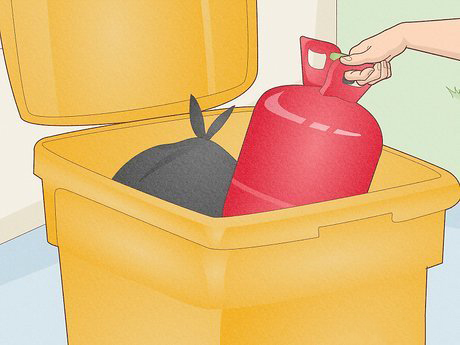
In most parts of the UK, empty helium tanks can be recycled as metal waste. However, rules may vary depending on your local council.
👉 You can usually:
👉 Avoid:
If you’re unsure, check your local council website for guidance on disposing of gas cylinders or pressurised containers.
If you’re looking for a reliable option, explore our helium tank for balloons designed for easy and safe use at home.
Most disposable helium tanks come with a built-in nozzle, so you do not need a separate regulator. Simply attach the balloon and press to release gas.
Helium itself does not expire, but tanks can lose pressure over time if not stored properly. It’s best to use the tank within a reasonable period after purchase.
This depends on how many balloons you need. Small tanks are suitable for 20–30 balloons, while larger tanks can fill 50 or more.
Yes, overfilling a balloon can cause it to burst. Always inflate slowly and stop when the balloon feels firm but not tight.