Introduction
Helium balloons can instantly make any party feel more exciting — whether it’s a birthday celebration, baby shower, wedding, or holiday event.
But if you’ve never used a helium tank before, it’s normal to wonder:
👉 How do you use it correctly?
👉 What if the tank doesn’t work?
👉 How can you avoid wasting helium?
The good news is that disposable helium tanks are designed to be simple and beginner-friendly. In this guide, we’ll show you exactly how to use a helium tank safely and properly for balloons.
What Comes With a Helium Tank?
Most disposable helium tank kits include:
- Helium cylinder
- Balloon filling nozzle
- Valve system
Some kits may also include balloons and ribbon.
Before starting, make sure all parts are connected correctly.
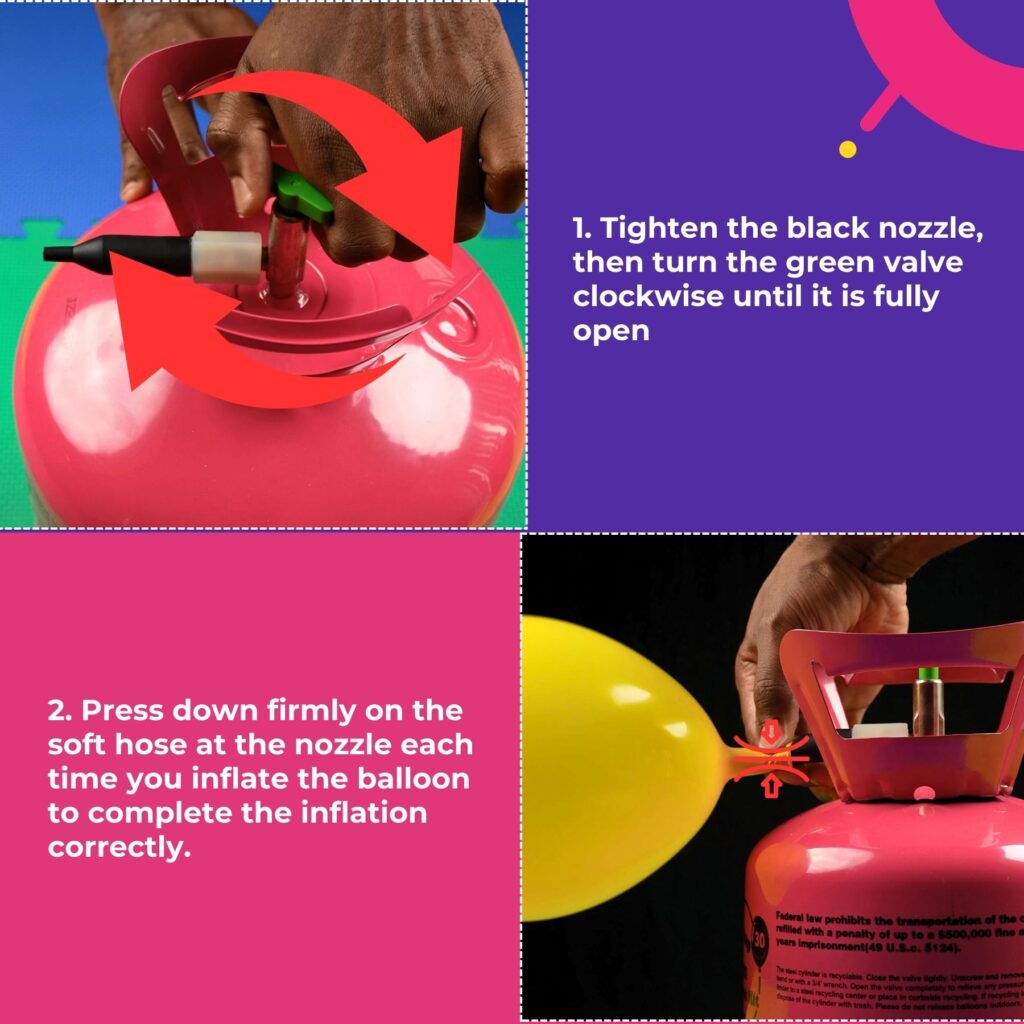
Step 1 – Attach the Nozzle Properly
The first step is attaching the nozzle to the tank valve.
Tips:
- Screw the nozzle tightly into place
- Do not overtighten
- Make sure there are no loose connections
👉 A loose nozzle can cause gas leakage.
Step 2 – Open the Valve Slowly
Slowly turn the valve counterclockwise to release helium pressure into the nozzle.
Important:
- Open gradually
- Do not force the valve
- If you hear gas immediately, check connections first
💡 Most tanks only release helium when the nozzle is pressed.
Step 3 – Inflate the Balloon
Now insert the balloon onto the nozzle.
To Inflate:
- Hold the balloon firmly
- Press or bend the nozzle gently
- Watch the balloon expand slowly
Once full, release the nozzle immediately.
Avoid Overfilling Balloons
One of the most common mistakes is overinflating.
Overfilled balloons:
- Pop easily
- Float poorly
- Waste helium
A properly filled balloon should:
- Feel round, not stretched
- Have a smooth surface
- Still feel slightly flexible
Latex vs Foil Balloons
Different balloon types behave differently.
Latex Balloons
- Most common
- Float around 6–12 hours
- Best for same-day events
Foil Balloons
- Float much longer
- Use different helium amounts
- Better for multi-day decorations
👉 Larger foil balloons require more helium than standard latex balloons.
Temperature Affects Balloon Float Time
Many people think the tank has a problem when balloons shrink slightly.
Usually, it’s temperature.
Cold temperatures:
- Make helium contract
- Balloons may appear smaller
Warm temperatures:
- Expand helium
- Can cause balloons to burst
👉 Room temperature is ideal.